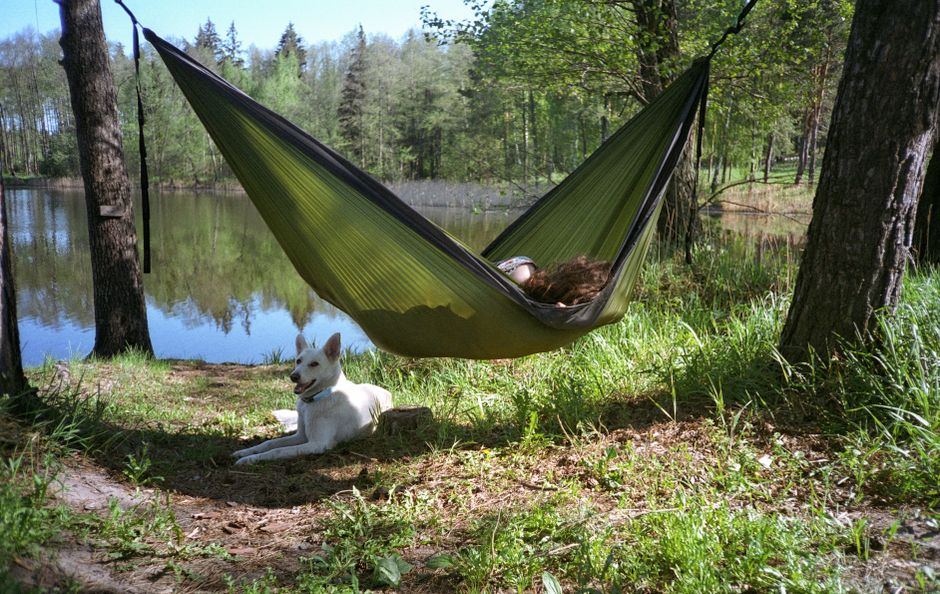
Do I need tree straps separately?
Check first -- some hammocks (like several of ours) include tree straps, while others sell them separately. Straps are required either way, since ropes alone can damage tree bark.
Can one person set up a camping hammock alone?
Yes, most single and double hammocks take under 5 minutes to hang solo once you've picked two trees roughly 12-15 feet apart.
Is a double hammock only for two people?
Not necessarily -- many people prefer a double size solo for the extra room to lie at a flatter, more comfortable diagonal angle.
How cold-weather-ready is a camping hammock?
A hammock alone leaves your underside exposed to cold air. Pairing it with an underquilt extends comfortable use down to roughly 20F; otherwise plan for temperatures above 40F.
Do I need a bug net?
Recommended for humid or buggy environments. Some hammocks include an integrated net, others require a separate one that attaches to the suspension line.
How far apart should the two trees be?
About 12-15 feet apart works best for a standard 9-11 foot hammock, using the classic 30-degree hang angle for a comfortable sag. Trees farther apart than that still work fine -- you'll just need longer straps and a higher anchor point to keep the same angle. Under about 10 feet gets fiddly no matter what you do.
Can I hang a camping hammock without trees?
Yes -- freestanding hammock stands exist for backyards, campsites without suitable trees, or beach camping, though they add weight and bulk most backpackers skip. For trail use, picking a campsite with two live trees 6+ inches in diameter and 12-15 feet apart is the more common approach.
Should I use an underquilt or a regular sleeping pad for warmth?
An underquilt hangs underneath the hammock and stays fully lofted, so it keeps insulating all night. A sleeping pad works too, but your body weight compresses it against the hammock fabric, which flattens the insulation right where you need it most -- pads are the budget option, underquilts perform better in genuinely cold conditions.
What's the actual weight capacity, and can two heavier campers share a double hammock?
Most double hammocks (including our ENO DoubleNest pick) are rated around 400 lbs combined; our Kammok Roo (Best Premium) pick is rated closer to 500 lbs, which gives more headroom if both campers are on the heavier side. Always check the specific model's listed rating rather than assuming every 'double' hammock carries the same capacity.
Does a camping hammock come with a rain tarp?
Usually not -- standalone camping hammocks like the ones above are sold as the hammock body plus suspension straps, and a rain tarp/fly is a separate purchase. If you're setting one up ahead of rain, rig the tarp's own ridgeline directly to the trees (not to the hammock) so it stays taut and doesn't sag when you climb in and out.
Does it matter if a hammock is made from nylon or polyester?
Both work, but they trade off differently. Ripstop nylon is lighter and more breathable, which is why most backpacking-focused hammocks (like our Hennessy pick) use it, but it stretches slightly under load and loses some strength when wet. Polyester holds its shape better, resists UV and mildew longer, and dries faster, making it a reasonable choice if the hammock will see frequent sun or rain exposure at a fixed campsite rather than being packed in and out on the trail.